Scaling Climate-Resilient Rice Cultivation Through Quality Seed Distribution in Assam
Access to quality seed is a critical prerequisite for enhancing agricultural productivity, strengthening climate resilience and improving rural livelihoods. Under the UPSCALE Project, efforts are being made to promote the adoption of climate-resilient rice varieties among farming communities in Assam through targeted seed distribution and farmer engagement initiatives. The project aims to increase sustainable productivity, farm income, and food and nutritional security by scaling evidence-based climate-resilient rice and agricultural technologies.
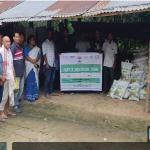
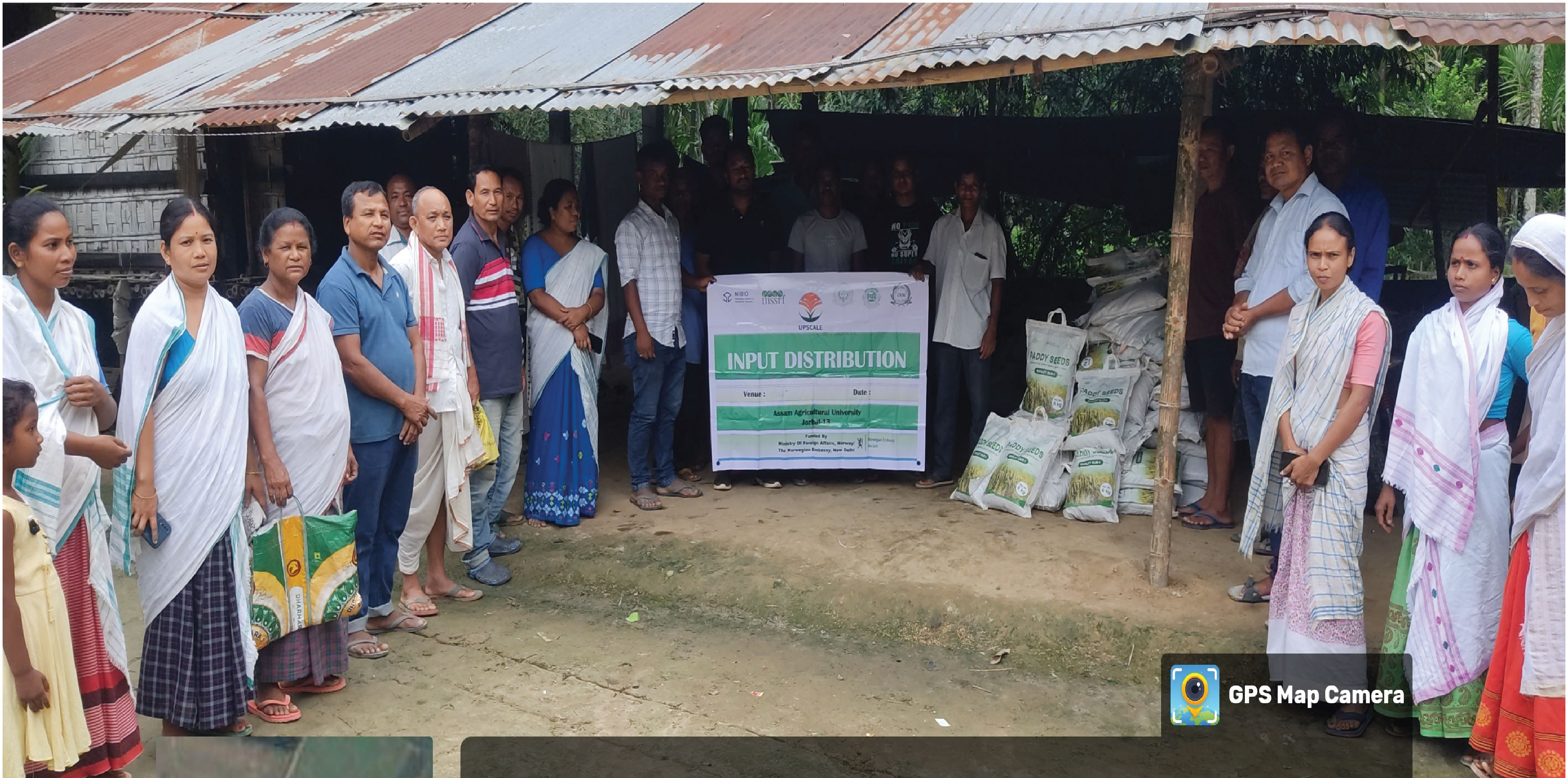
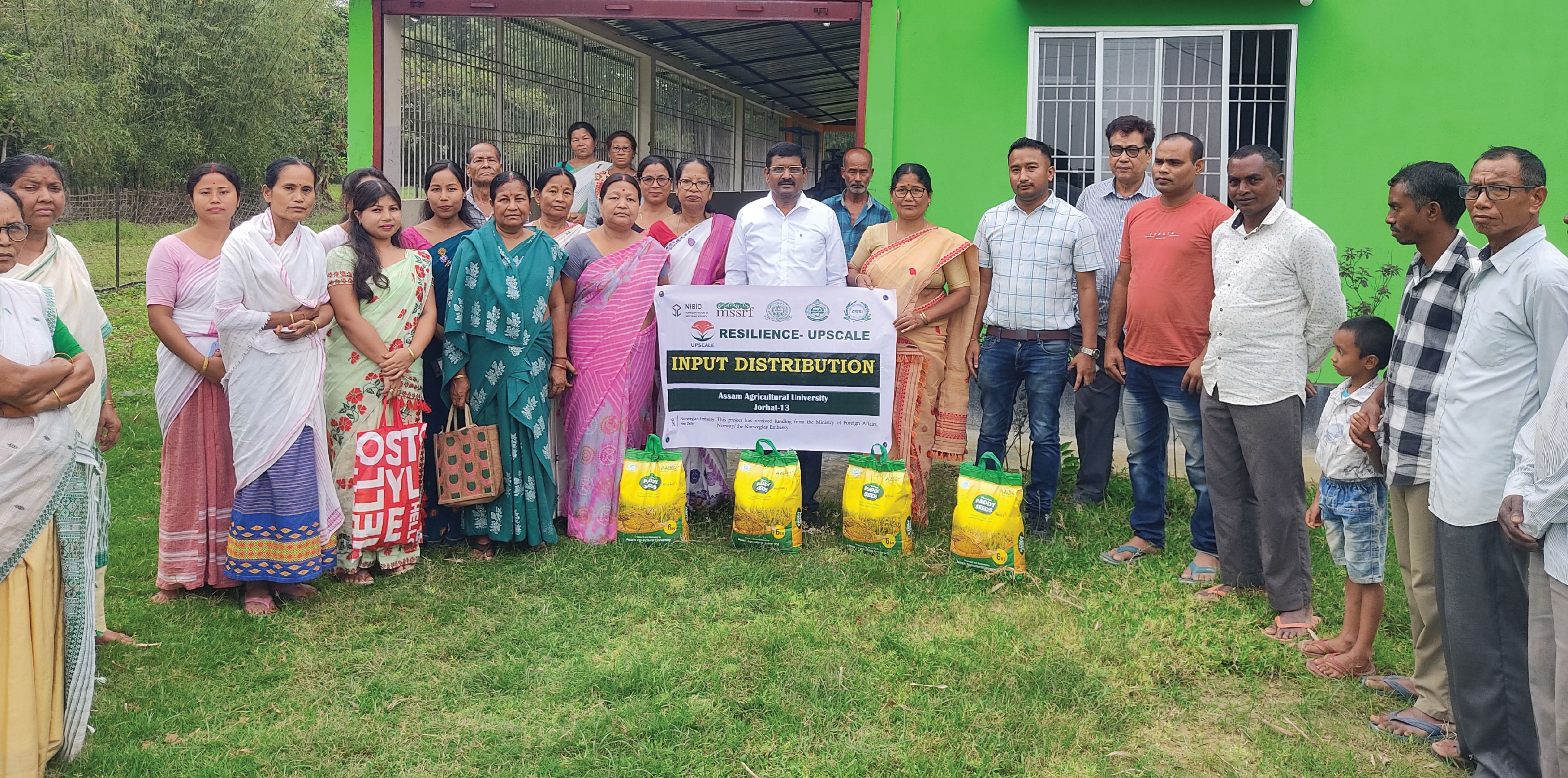
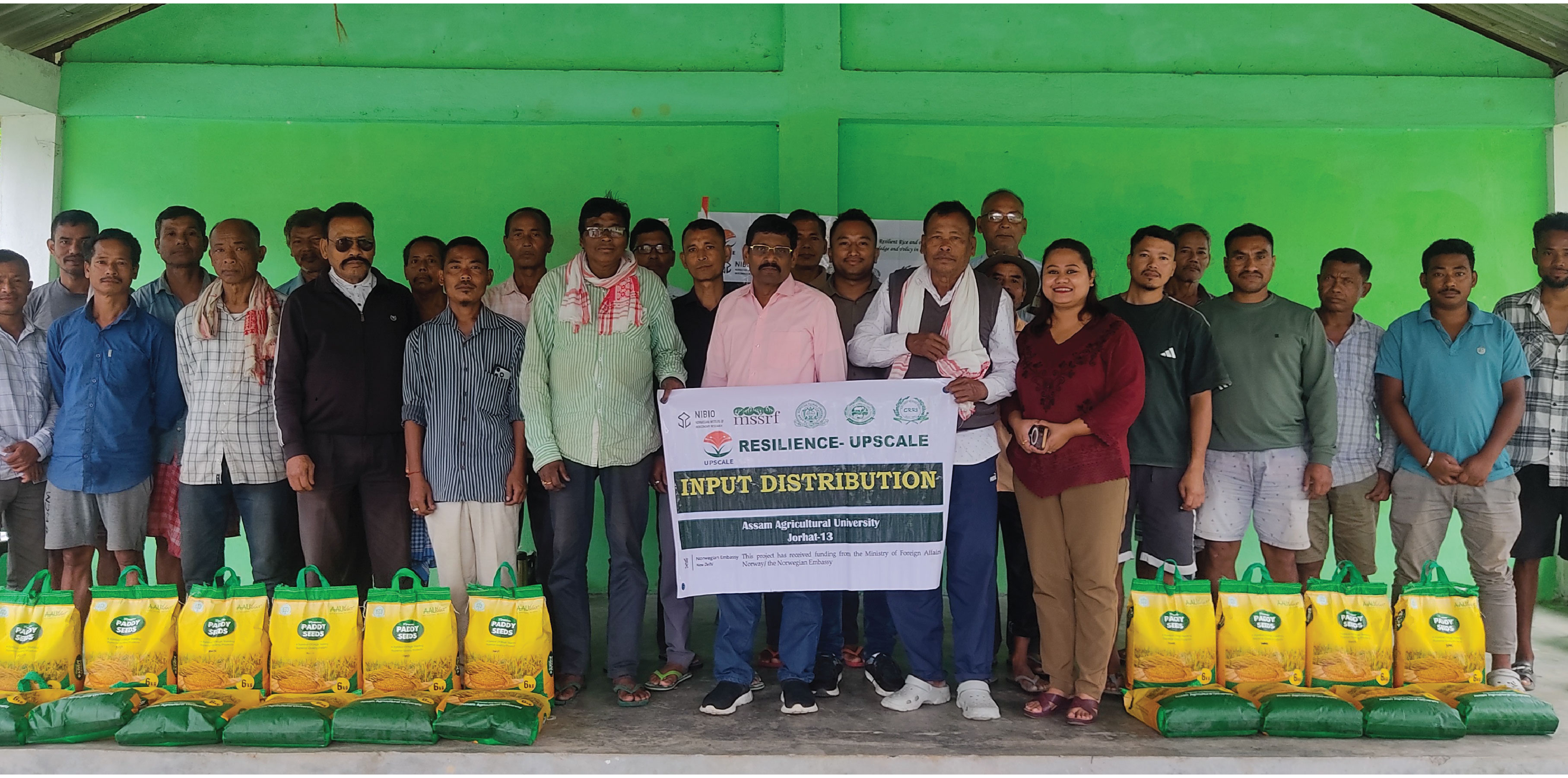
As part of this initiative, quality paddy seeds of climate-resilient varieties were distributed to farmers across several districts of Assam during 2025 and 2026. The programme focused on expanding farmers' access to climate-smart agriculture (CSA) varieties that can perform well under changing climatic conditions while contributing to higher productivity and greater livelihood security.
In 2025, a total of 9,066 kg of paddy seed was distributed, including Labanya, Ranjit, Ranjit Sub-1 and Bahadur Sub-1. Building on the positive response from farming communities, the programme expanded significantly in 2026, distributing 16,832 kg of seed comprising Labanya, Ranjit, Ranjit Sub-1 and CR Dhan-310. The substantial increase in seed distribution demonstrates growing farmer demand for improved varieties and highlights the importance of strengthening local seed systems for wider technology adoption.
The seed distribution activities reached farming communities in Borhola, Alengmora, Thengal Gaon, Bahfola, Nagabat and Dangdhora in Jorhat district; Senchowa, Phulaguri, and Kampur in Nagaon district; Chenimari in Darrang district; and Dihingia Gaon in Karbi Anglong district. Alongside seed distribution, farmer meetings and awareness programmes were organized to strengthen knowledge of improved crop management practices, varietal selection and climate-resilient agriculture.
Beyond seed distribution, the UPSCALE Project reached a total of 2,459 farmers through various climate-resilient agriculture interventions. Among them, 1,660 farmers benefited from quality seed production initiatives, 233 farmers were supported under crop diversification activities, 315 farmers received training and support on Information and Communication Technology (ICT)-based agricultural practices and 251 farmers participated in Integrated Pest Management (IPM), Integrated Nutrient Management (INM) and Integrated Disease Management (IDM) programmes. These interventions complemented seed distribution by equipping farmers with the knowledge and skills required for sustainable and climate-resilient crop production.
The initiative works towards UPSCALE's aim of accelerating the adoption of sustainable and climate-resilient rice technologies in climate-vulnerable regions of Assam. By ensuring timely access to quality seed and promoting farmer participation, the project contributes to stronger seed systems, improved farm productivity and enhanced resilience of rural communities to climate variability. The UPSCALE Project specifically focuses on scaling climate-resilient agricultural innovations that improve productivity, adaptive capacity and livelihoods of smallholder farmers.
The successful implementation of the seed distribution programme demonstrates how strengthened seed systems can serve as an effective pathway for scaling climate-resilient agriculture. As adoption continues to grow, these efforts are expected to contribute to increased farm incomes, improved food security, and sustainable agricultural development across Assam.